
Your cleaning cycles might be costing you more than just time; they could be damaging your valuable equipment. Using the wrong settings can lead to costly repairs and compromise safety.
Correctly using a Clean-In-Place (CIP) system is vital for protecting your investment. The key is precise temperature control: use the alkali solution at 75-82°C to dissolve fats and proteins, but keep the acid solution cooler, at 65-70°C, to prevent severe corrosion to your tanks and pipelines.
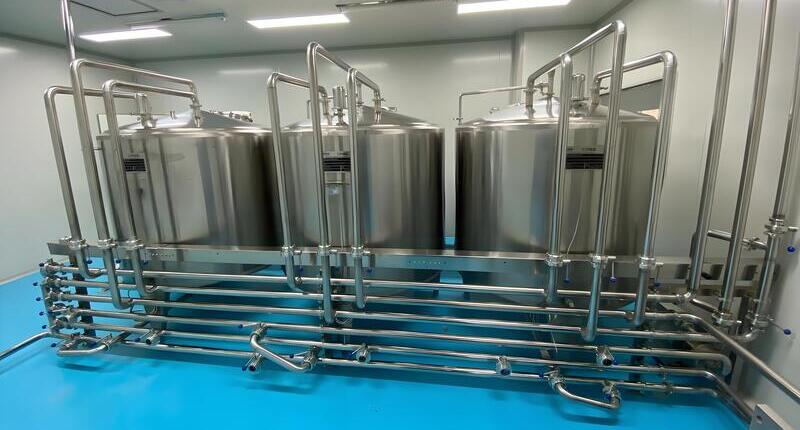
Over the years, I've partnered with hundreds of dairies, from large-scale operations to specialized producers. A common thread I've noticed is that while everyone appreciates the value of automation, the small details are what truly separate a good operation from a great one. The efficiency and longevity of your entire processing line can hinge on understanding the nuances of your cleaning protocol. Let's delve into why these details are not just best practices, but essential components of a profitable and sustainable dairy business.
Why is Automated CIP Cleaning Non-Negotiable for Modern Dairies?
Manual cleaning is slow, inconsistent, and exposes your staff to unnecessary risks. This outdated process leads to longer production downtimes, creates opportunities for contamination, and introduces significant safety liabilities.
Automated CIP systems are essential because they eliminate the need for manual disassembly, ensuring a thorough and repeatable clean without leaving any dead spots.1 This practice boosts hygiene, protects employees from harsh chemicals, and significantly reduces production downtime, directly improving your operational efficiency.

In my work providing turnkey farm solutions, I’ve seen the dramatic difference an automated CIP system makes. It’s the backbone of any modern Dairy Production Line. The traditional method of breaking down equipment piece by piece is not only labor-intensive but also introduces variability. Did the operator scrub every surface correctly? Was the reassembly done properly to prevent leaks or contamination? Automation removes this guesswork. A well-designed CIP system, integrated with our Pasteurization Units or Processing Tanks, delivers a validated, consistent cleaning cycle every single time. This reliability is the foundation of food safety and quality control. It’s not just about cleaning; it’s about control, safety, and efficiency.
| Feature | Manual Cleaning | Automated CIP System |
|---|---|---|
| Consistency | Variable, operator-dependent | Highly repeatable, consistent |
| Safety | High risk (chemical exposure) | Low risk (contained system) |
| Downtime | Long (disassembly/reassembly) | Short (automated cycles) |
| Resource Use | Often excessive | Optimized and efficient |
Are You Using the Wrong Temperatures in Your CIP Cycle?
Many operators believe that for cleaning dairy equipment, hotter is always better. This common mistake could be silently destroying your expensive tanks, pumps, and pipelines through accelerated corrosion.
This is a critical misconception. For optimal results, your alkali wash must be hot, around 75-82°C, to effectively break down milk fats and proteins. However, the acid wash must be cooler, between 65-70°C. Using acid at high temperatures causes severe equipment damage.

During a recent consultation at a processing plant, I noticed their team was running both acid and alkali cycles at nearly 90°C. They thought the extreme heat was a sign of a more powerful clean. We need to be clear about what each chemical does. The alkali solution's job is to saponify fats and dissolve proteins. For this, high temperature is your friend; it increases the reaction rate and cleaning power. However, the acid's role is completely different. It's designed to dissolve mineral deposits, like milkstone and water scale. This chemical reaction works perfectly well at a lower temperature. When you heat acid above 70°C, its corrosive nature is amplified dramatically. I have seen this mistake cause premature failure in high-quality stainless steel, especially at welds, elbows, and connection points on Cooling Tanks and fermentation vessels. This isn't just a maintenance issue; it's a direct threat to the lifespan of your capital investment.
What Are the Hidden Dangers of High-Temperature Acid Cleaning?
The damage from incorrect CIP temperatures is not just confined to your equipment. The resulting hazardous fumes can pose serious health risks to your team and create a corrosive atmosphere in your facility.
Beyond corroding equipment, heating acid excessively releases harmful acidic fumes. These fumes are a potent respiratory irritant for operators and can cause long-term health issues. They also create a corrosive environment in your plant, damaging electrical systems, control panels, and other machinery.

Protecting your people and your entire facility should be a top priority. When I walk into a plant, a sharp, acidic smell is an immediate red flag. It’s a clear sign that high-temperature acid is being used, creating fumes that are dangerous to inhale. Operator safety should never be compromised for a perceived shortcut in cleaning. Furthermore, these corrosive vapors don't just disappear. They settle on surfaces throughout your plant. I’ve seen this invisible threat cause premature rust and failure on unrelated equipment, like the control panels for Barn Fans or the casings of nearby motors. The damage spreads far beyond the processing line itself. This is why at NexAgri Solutions, we advocate for a holistic approach. A correctly configured CIP system not only cleans your Milking Parlor and processing equipment effectively but also contributes to a safer and more durable environment for your entire operation.
Conclusion
Mastering your CIP system's temperature and concentration is about more than just cleaning. It's about protecting your investment, ensuring safety, and maximizing your dairy's long-term profitability and operational efficiency.
"What is Clean in Place (CIP)? - Oklahoma State University Extension", https://extension.okstate.edu/fact-sheets/what-is-clean-in-place-cip. This source provides evidence on how automated CIP systems improve cleaning consistency and eliminate dead spots compared to manual methods. Evidence role: mechanism; source type: research. Supports: Automated CIP systems ensure thorough cleaning and eliminate dead spots.. ↩

